Item Story & Historical Context
During the Taisho era (1912–1926), Japanese postal culture experienced a celebrated artistic renaissance. Postcards were treated not merely as utilitarian correspondence, but as miniature canvases displaying traditional woodblock aesthetics, delicate lithography, and exquisite ink wash (sumi-e) paintings.
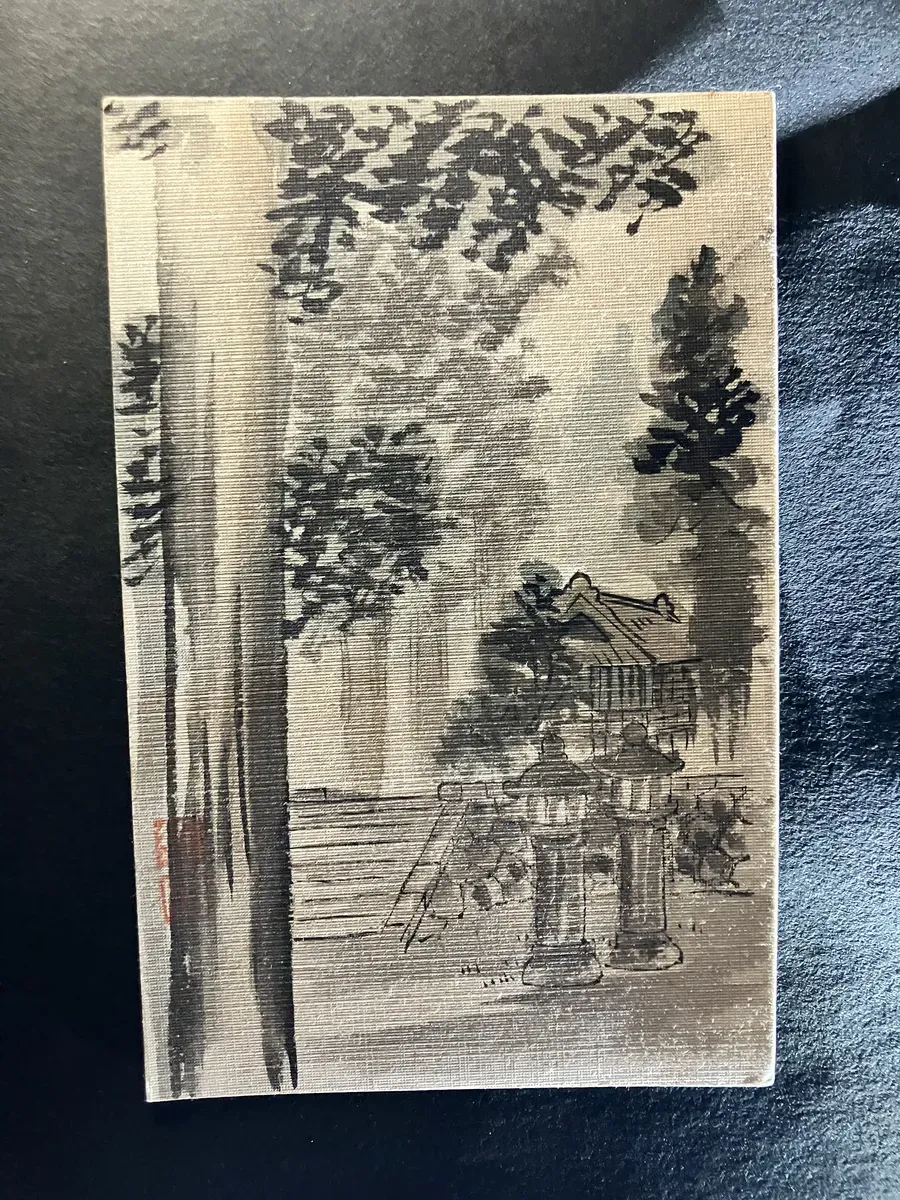
The front of this postcard presents a serene, atmospheric monochrome landscape rendered on fine ribbed art stock. Two traditional stone lanterns (tōrō) stand guard beside ancient cedar trees and stone stairways leading toward a secluded forest shrine, captured in varying tonal washes of diluted gray and dense black ink. A vermilion artist seal mark sits delicately along the lower left margin.
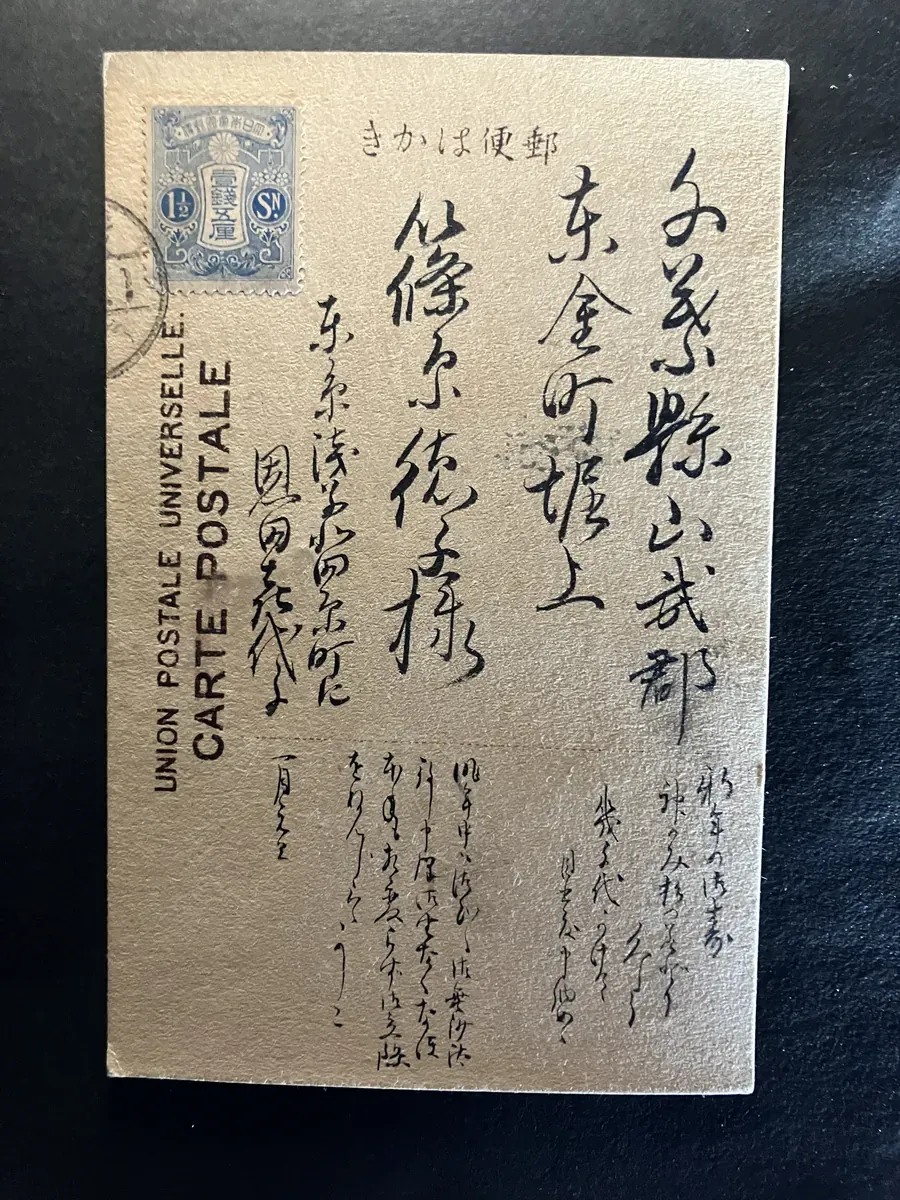
The reverse is a masterclass in classical East Asian cursive calligraphy (sosho). Inscribed with deep black sumi ink, the brushwork displays breathtaking rhythm, fluid brush pressure, and graceful line weight. Addressed from Tokyo to a recipient in Chiba Prefecture, the card bears an original 1.5-sen blue definitive stamp tied with an authentic postal date cancel, alongside early international format typography (“UNION POSTALE UNIVERSELLE / CARTE POSTALE”).
A sublime fusion of traditional Japanese fine art and personal postal heritage from a century ago.
Condition & Details
- Type: Fine Art Lithograph Postcard / Real Postal Correspondence
- Origin/Context: Tokyo to Chiba Prefecture, Taisho to Early Showa Era (c. 1920s)
- Markings:
- Front: Monochrome ink-wash shrine artwork with a subtle vermilion red artist seal.
- Reverse: Original blue 1.5-sen definitive stamp tied by postal date cancel; masterfully executed flowing black brush calligraphy; international postal headers.
- Condition: Excellent historical condition. The ribbed textured paper has developed a warm, uniform age patina. The ink painting and the reverse sumi calligraphy remain sharp, deeply saturated, and visually stunning. Corners and edges are clean and structurally sound.
- Includes: Comes carefully packed in a protective archival sleeve with rigid backing to ensure safe transit.
Shipping & Payment
- Payment: Secure checkout powered by Stripe. All major credit cards accepted.
- Fulfillment: Ships directly from Japan via Japan Post with end-to-end tracking. Every order is dispatched within 3 business days, and your tracking number will be sent directly to your email as soon as it’s on its way.
- Shipping Notice: To ensure maximum care, archival safety, and accurate weight-based insurance for each distinct historical artifact, all items are packaged and shipped individually (no combined shipping available).